
Atlantic Hurricane Season Approaches Historic Milestone As September 11th Nears
(KMDL-FM) September 11th- that's a date every American understands the significance of in our nation's history. This Friday in New York, Washington, and Louisiana, Americans will gather to remember the lives lost in that horrible terrorist attack. And while the focus of those gatherings will be somber, September 11th also holds a unique place in Louisiana's Hurricane history as well.
Why Are September 10th and 11th Important Dates For Hurricane Forecasters?
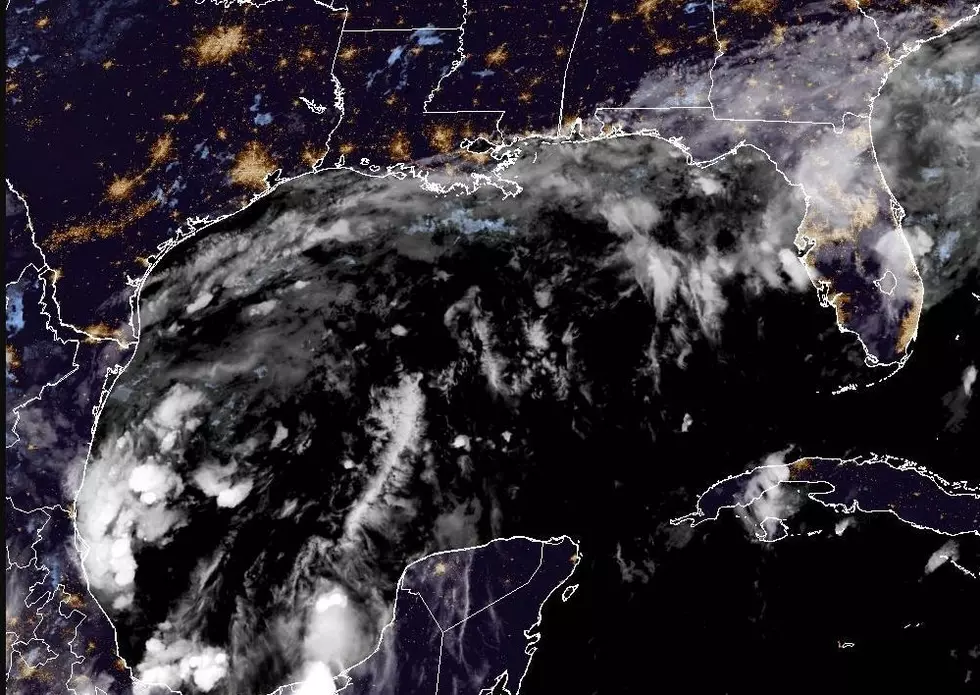
Before we get to Friday, September 11th, let's remind you about Thursday, September 10th. That date, September 10th, is the official peak of the Atlantic Hurricane Season. The good news about that "high point" of the season is the fact that, as of this morning, the National Hurricane Center is not forecasting any tropical development over the next seven days.

Besides the fact that there are no devastating storms in our immediate future, if September 11th comes and goes without a hurricane, then we will have a new "meteorological record" which may not ever be equalled again.
September 11th is the latest date an Atlantic Hurricane has formed. It happened twice in 2002 and again in 2013 with Gustav and Humberto, respectively. As of right now, it does appear as though 2026 will become the new year of record for the latest formation of a hurricane in the Atlantic Basin.
Has There Ever Been a Hurricane Season that Spawned No Hurricanes?

I know you're wondering, and the answer is no: we have never had a year without a hurricane. At least since the middle 60s, when the satellite era of hurricane tracking began.
READ MORE: Forecasters Reveal Reason Why Hurricane Season 2026 is So Quiet
Forecasters are crediting the strong El Niño as the reason why Atlantic hurricanes have not formed this year. We should note that 2002 was an El Niño year, while 2013 was not. So while there is evidence to support El Niño as the reason, forecasters are not quite ready to say that it is absolutely the case.
As a point of reference, in a typical Hurricane Season, the average date for the first named storm is June 20th. The average date for the season's first hurricane is August 11th. And the average date for a typical season's first major hurricane is September 1st. We have surpassed all those dates with no storms to report in 2026.
How Many Named Storms Have Formed in 2026?
So far in 2026, we have had five named storms. Three of those storms, Arthur, Bertha, and Edouard, have affected Louisiana and the northern Gulf. What makes this interesting is that the effects of El Niño, namely the upper level windshear has been lower in this portion of the ocean than in any other place in the Atlantic Basin.
Perhaps that is the reason why those storms, as weak as they were, were able to hold together and make a landfall along the northern Gulf Coast. This might also give coastal residents of the upper Texas coast, Louisiana, Mississippi, and Alabama reasons to be concerned as we move into late September and October.

During late September and October, cold fronts start making their way through Louisiana and then stall out over the Gulf. Often, these weather systems spawn low-pressure systems that sit and spin over the warm waters of the Gulf as the cold front dissipates. However, the low strengthens and becomes a "close to shore" tropical system.
We aren't saying that will be the case this fall, but if it happens, I don't think anyone at the National Hurricane Center will be surprised. Regardless, the forecast for the next few days suggests no activity in the tropics, and we are here for it.
READ MORE: The Hurricane Name Shared By More Louisiana Residents This Season
Still, with half a season left on the calendar, we can't completely let our guard down, but we can start dreaming of gumbo weather. Which shouldn't be more than a few weeks away.
Hurricane Landfall Probabilities Revealed: Parish-by-Parish Breakdown
More From 97.3 The Dawg